7.06 5.16
clinch strikes per fighter per 15 min · 2015–17 v 2024–26 · 2,510 / 2,344 performances
Down 27%, on a range of −2.07 to −1.74. The clinch is leaving.
Striking range · 2015–2026
For ten years fighters have been quietly deleting the most intimate part of the sport — the tie-up on the fence, where the knees and the takedowns come from. They still shoot as often as they did in 2015. They just do it from across the cage. One man never got the memo.
The question
The received wisdom
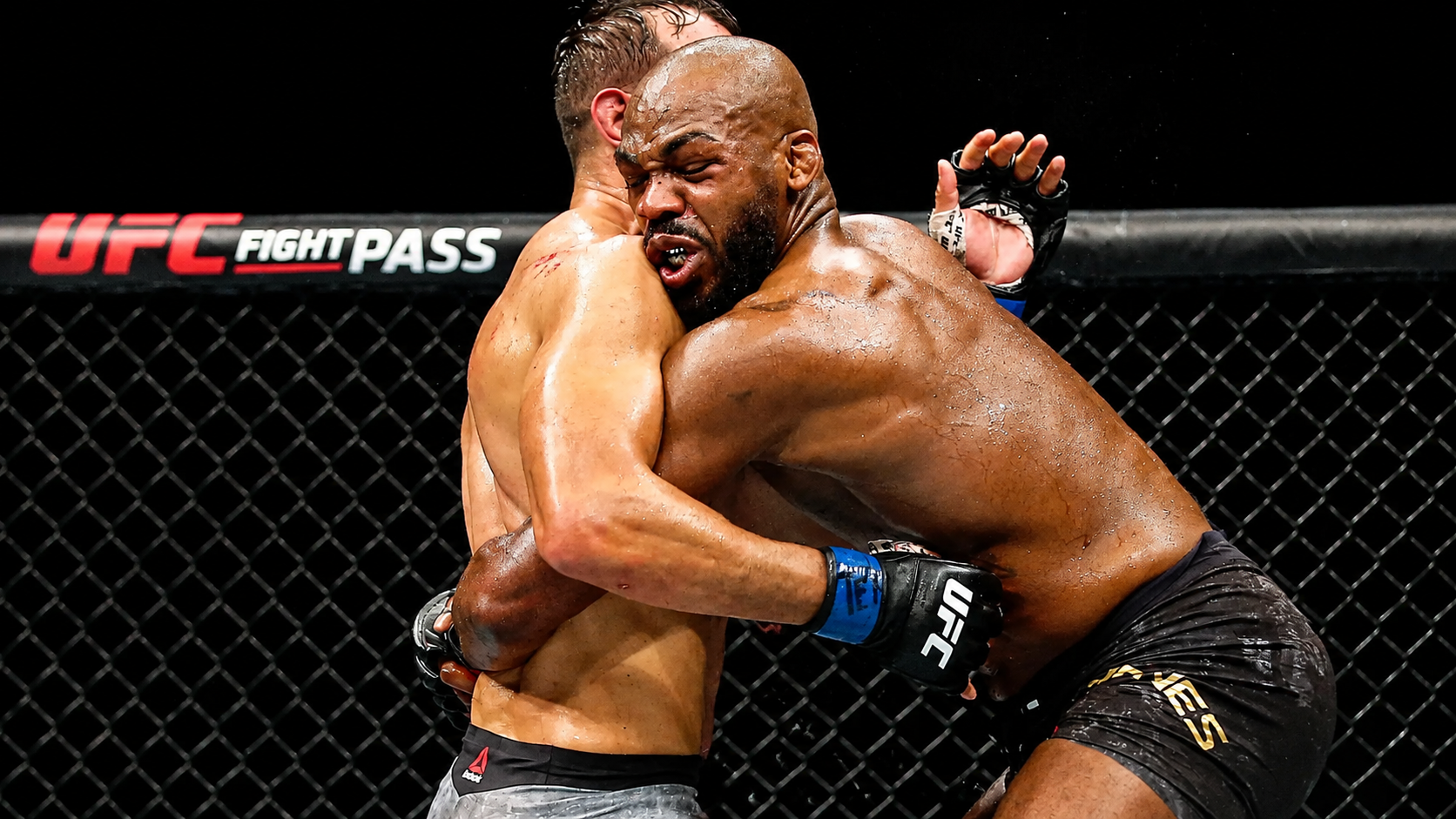
The clinch is where fights are really decided. Dirty boxing, knees up the middle, the shoulder on the fence, the takedown entries — it is the part of the sport the casual fan never sees, and as the game gets more wrestling-heavy it can only matter more. Every takedown starts with two men tied up.
TLDR; Quick Facts
7.06 5.16
clinch strikes per fighter per 15 min · 2015–17 v 2024–26 · 2,510 / 2,344 performances
Down 27%, on a range of −2.07 to −1.74. The clinch is leaving.
14.1% 8.7%
clinch share of significant strikes landed · distance went 71.5% → 82%
Where it went. Four in five strikes now land from range.
4.05 4.10
takedown attempts per fighter per 15 min · +0.05, range −0.09 to 0.18
The interval sits across zero. It is not the wrestling. The shots are exactly where they were.
1.000
located strikes ÷ significant strikes · every year, 2015–2026
It is not the stat sheet either. The three locations sum to the total in every single year.
18.2% 9.1%
heavyweight band · 424 / 400 fights · light 12.3% → 8.4%, middle 14.0% → 8.9%
Every division. The heavyweights were the most clinch-bound and have halved.
68.8% 66.6%
clinch leader's win rate · 430 / 305 fights · difference −2.3, range −9.2 to 4.6
The man who wins the clinch wins as often as he ever did. Only the usage changed.
7.9%
the floor, 2024 · 2026 reads 9.6% · peak 2015 at 16.2%
Not a straight line. Halved to a floor, then two years of creeping back.
In short
The sport has moved its striking to range and kept its wrestling exactly where it was. What it cut out is the tie-up in between — and the tie-up pays what it always paid.
The answer
Take every men's fight since 2015 and count where each significant strike landed: at distance, in the clinch, or on the ground. In 2015–17 a fighter landed 7.06 clinch strikes for every fifteen minutes in the cage. In 2024–26 he lands 5.16. That is a fall of 27%, on a range of −2.07 to −1.74. That range is the honest span the true drop sits in: when it stays entirely on one side of zero, something really moved, and when it straddles zero, nothing did. This one never comes near it. Put a clock on it instead. In 2015 something landed in the clinch about once every two minutes of cage time. Now it is closer to once every three.
The strikes did not vanish. They moved. Distance strikes went from 35.76 to 48.55 per fifteen minutes — up 35.8%. As a share of everything landed, the clinch went from 14.1% to 8.7% — one strike in seven, then; now fewer than one in ten. Distance went from 71.5% to 82%. Ground strikes fell with the clinch, 7.20 to 5.50.
Here is the part that turns a chart into a story. If the clinch was going because the sport was going to the floor less, the takedowns would have gone with it. They did not. Attempts per fighter per fifteen minutes: 4.05 then, 4.10 now, a difference of 0.05 on a range from −0.09 to 0.18. Landed: 1.48 then, 1.45 now. The wrestling is exactly where it was.
Count where every significant strike in the men's divisions has landed since 2015. In 2015–17 a fighter landed 7.06 clinch strikes per fifteen minutes; in 2024–26 he lands 5.16. A fall of 27%, range −2.07 to −1.74 — roughly one clinch strike every two minutes of cage time then, nearer one every three now. The strikes moved to distance: distance strikes went 35.76 to 48.55, up 35.8%, and the clinch's share of everything landed fell from 14.1% to 8.7%.
The takedowns did not move with it. Attempts per fighter per fifteen minutes were 4.05 then and 4.10 now, a difference of 0.05 on a range from −0.09 to 0.18. The wrestling is where it was. Only the tie-up in between has gone.
Clinch strikes, per fighter per 15 min
−27%
7.06 to 5.16. Range −2.07 to −1.74 — nowhere near zero.
Takedown attempts, same unit, same years
+0.05
4.05 to 4.10. Range −0.09 to 0.18. The interval contains zero: no change to report.
So fighters shoot as often as they did a decade ago. They just no longer stand in the clinch first. The entry that used to run through a tie-up on the fence now runs through a level change from range, and the strikes that used to be thrown from the tie-up are thrown from range too.
Fighters shoot as often as ever. They no longer stand in the clinch first: the entry now runs through a level change from range, and the strikes come from range too.
2015 to 2026, one year at a time
The clinch's share of everything landed, year by year, against the takedown attempts made in the same years. One of these is a staircase down. The other is a floor.
Clinch shareTakedown attempts
Clinch share of significant strikes landed
Takedown attempts, per fighter per 15 minutes · line: 2015–17 mean 4.05, 2024–26 mean 4.10
Men's divisions only, 9,700 fighter-performances. Both panels share the year axis; each has its own scale, drawn from zero. Two measures of different scale get two panels rather than one chart with two axes.
Read the top panel honestly and it is not a slope. Three real drops — 2015→16, 2019→21, 2023→24 — with rebounds between and after them. The peak is 2015 at 16.2%, the floor is 2024 at 7.9%, and 2026 reads 9.6%: two years of creeping back. The clinch has halved to a floor. It has not kept falling, and a page that drew a straight line down would be lying about the last two years.
The bottom panel is why the top one matters. Takedown attempts wander between 3.48 and 4.44 a year and finish where they started. Whatever the sport did to its clinch, it did not do it by wrestling less.
One fighter walked into that decline and ignored it.
The top panel is not a slope. Three real drops — 2015→16, 2019→21, 2023→24 — with rebounds between them. Peak 16.2% in 2015, floor 7.9% in 2024, and 2026 reads 9.6%: the clinch halved to a floor and has crept back for two years. The bottom panel is why it matters. Takedown attempts wander between 3.48 and 4.44 a year and finish where they started. The sport did not do this by wrestling less. One fighter walked into that decline and ignored it.
276 clinch strikes, more than anyone

Marc-Andre Barriault — "Powerbar", 17-11-0 — has landed 276 clinch strikes since 2015. That is more than any man in the era with ten fights and two hundred strikes to his name. 27.7% of everything he lands, he lands from the tie-up, at 23.52 per fifteen minutes — the highest rate in the sample.
The night to watch is UFC 285, 4 March 2023, against Julian Marquez. Barriault landed 109 significant strikes and 49 of them — 45.0% — came from the clinch, the most he has ever landed from there. The finish came from there too: punches to the head in the clinch, round two. A knockout from the position the sport had spent eight years leaving.
He arrived in May 2019, when the sport's clinch share was already down to 11.6%, and built a career out of the thing everybody else was walking away from. Seventeen fights, through to February 2026, and the shoulder on the fence in all of them.
Standing behind him is Kamaru Usman: 242 clinch strikes at 16.1% across 20 fights — a welterweight champion whose fence work was his signature, and whose share is now nearly double the sport's. And the purest of all is Drakkar Klose, who lands 32.7% of everything from the clinch, 210 strikes over 13 fights. One in three.
There is no origin to reach back to. Strike location is recorded only from 2015, and the biggest single drop in the whole series is the first step of it — 2015→16. Whatever started this had started before the data could see it.
Marc-Andre Barriault — "Powerbar", 17-11-0 — has landed 276 clinch strikes since 2015, more than any man in the era with ten fights and two hundred strikes to his name. 27.7% of everything he lands comes from the tie-up, at 23.52 per fifteen minutes, the highest rate in the sample. His night was UFC 285, 4 March 2023, against Julian Marquez: 49 of his 109 strikes from the clinch — 45.0% — and the round-two knockout thrown from the clinch too. He arrived in May 2019, when the sport's clinch share was already down to 11.6%, and built seventeen fights out of the thing everybody else was leaving.
Behind him, Kamaru Usman: 242 clinch strikes at 16.1% over 20 fights. The purest is Drakkar Klose, who lands 32.7% of everything from the clinch — 210 strikes over 13 fights. There is no origin to reach back to: location is recorded only from 2015, and the biggest drop in the series is its first step.
Heavy, middle, light
Split the men's divisions into three bands and the fall is in all of them. The heavyweights were the most clinch-bound men in the sport — 18.2% of everything they landed in 2015–17 — and they have halved, to 9.1%. The middle band went from 14.0% to 8.9%, the light band from 12.3% to 8.4%. The ordering survives: the bigger the men, the more they still clinch. But nobody clinches like they did.
The fall is in every band. Heavyweights, the most clinch-bound men in the sport, went from 18.2% to 9.1% — halved. The middle band went 14.0% to 8.9%, the light band 12.3% to 8.4%. Bigger men still clinch more; nobody clinches like they did.
Change in clinch share · percentage points · 2024–26 minus 2015–17
Heavy — 424 / 400 fights −9.01
Halved
Middle — 1,366 / 1,058 fights −5.11
Real
Light — 720 / 886 fights −3.87
Real
Women's divisions −6.95
Real — see below
Not one interval touches zero. This is the same fall four times.
Does it still work?
A thing can leave a sport because it stopped working. Test it: take every fight where the two men landed ten or more clinch strikes between them and one landed more than the other, and ask how often the man who won the clinch won the fight.
In 2015–17, across 430 such fights, he won 68.8% of them. In 2024–26, across 305, he won 66.6%. The difference is −2.3 on a range from −9.2 to 4.6: nothing. The clinch pays what it paid. Fighters have not abandoned a position that stopped working. They have abandoned one that works as well as it ever did.
One caution the page owes you. Winning the clinch is correlated with winning the fight in general — the man landing more in the clinch is often the man landing more everywhere — so this is not "the clinch causes wins". The narrower claim is the striking one: that association has not weakened at all while the clinch's use has fallen by more than a quarter.
Did the clinch leave because it stopped working? Take every fight where the two men landed ten or more clinch strikes between them, unequally, and ask how often the man who won the clinch won the fight. 2015–17: 68.8% of 430. 2024–26: 66.6% of 305. The difference is −2.3 on a range from −9.2 to 4.6 — nothing. Fighters have abandoned a position that works as well as it ever did.
One caution: winning the clinch correlates with winning generally, so this is not "the clinch causes wins". The narrower claim holds — the association has not weakened while the clinch's use fell by more than a quarter.
Clinch leader's win rate · 2024–26 minus 2015–17 · percentage points
68.8% then, 66.6% now −2.3
No difference
Fights with ten or more clinch strikes landed between the two men, unequal. The row is in bone because containing zero is the finding.
Is it the data?
A fall like that has a cheap explanation, and it is worth killing before we go on. The cheapest way for a story like this to be false is a recording change. If the people logging strikes had simply stopped filling in the location for some fights, the clinch's share would fall for a reason that has nothing to do with fighting, and a page that did not check would publish a clerical artefact as a trend.
So, for every year from 2015: add up the strikes recorded at distance, in the clinch and on the ground, and divide by the significant strikes recorded in total. If any location data were missing, the number would sit below one.
A fall like that has a cheap explanation, worth killing before we go on. If the people logging strikes had stopped filling in the location for some fights, the clinch's share would fall for a clerical reason. So for every year since 2015, add the strikes recorded at distance, in the clinch and on the ground, and divide by the total. Missing location data would put the number below one.
A unit to reconcile with Gravity Always Wins, which says takedown attempts per fight have risen past six. This page says attempts per fighter per 15 minutes are flat. Both are true — a fight is the wrong denominator for a rate — and a reader who has read both should not be left thinking one of them is wrong.
All divisions. The freeze script behind this page asserts every one of these on every run and refuses to publish if any of them slips.
Every year, 1.000. The fall is in the fighting.
The women's divisions
The women's divisions sit at the light end of the scale, so the honest comparison is against the men's light band, not against all men. In 2015–17 the women landed 17.8% of their strikes in the clinch against the light men's 12.3% — 5.59 points more, on a range of 4.80 to 6.38. In 2024–26 it is 10.9% against 8.4%, 2.51 points more, range 1.97 to 3.05. Women clinch more than comparable men, in both eras, and the gap is real both times.
And they are leaving it too. The women's own fall, 17.8% to 10.9%, is −6.95 on a range of −7.76 to −6.14 — a drop of the same order as the heaviest men's. Across 1,782 women's fighter-performances, this is not a separate story. It is the same one, starting higher.
Compare the women against the men's light band, not all men. In 2015–17 the women landed 17.8% of their strikes in the clinch against the light men's 12.3%: 5.59 points more, range 4.80 to 6.38. In 2024–26 it is 10.9% against 8.4%, 2.51 points more, range 1.97 to 3.05. Women clinch more in both eras, and they are leaving it too — their own fall is −6.95, range −7.76 to −6.14, across 1,782 performances. Same story, starting higher.
Clinch share · women minus the men's light band · percentage points
2015–17 — 17.8% v 12.3% +5.59
Women clinch more
2024–26 — 10.9% v 8.4% +2.51
Still more, by less
The gap halved because both fell and the women fell from higher.
What this means for your training
The position pays what it paid, and your opponent almost certainly drills it less than he did. A tool that works the same and that the other man has stopped preparing for is not a relic. It is an edge that got cheaper.
The clinch pays what it paid, and your opponent drills it less than he did. A tool that still works and that the other man has stopped preparing for is an edge that got cheaper.
Still works. Less drilled against. An edge that got cheaper.
The fighter who wins the clinch exchange won 68.8% of those fights in 2015–17 and 66.6% in 2024–26 — the difference is −2.3 on a range that runs from −9.2 to 4.6. What has changed is the other side of the cage: clinch strikes are down 27% across the sport, which means the man in front of you has spent a decade drilling it less. Keep the knees, the shoulder, the frame on the fence. They have not stopped working.
The clinch winner won 68.8% of those fights then and 66.6% now — a difference of −2.3, range −9.2 to 4.6. Clinch strikes are down 27% across the sport, so the man in front of you drills it less. Keep the knees, the shoulder, the frame on the fence.
The shots have not gone anywhere — 4.10 attempts per fifteen minutes against 4.05 a decade ago — but they no longer come out of a tie-up. They come off a strike, from range. Drill the reactive double off the jab and the level change from distance, and drill the defence to both, because that is where the takedowns you will face now begin.
Attempts are unchanged, 4.10 per fifteen minutes against 4.05, but they no longer start from a tie-up. Drill the reactive double off the jab and the level change from range, and the defence to both.
Attempts flat. Landed flat, 1.48 to 1.45. Control share 19.5% to 18.1%. The grappling is intact. What the sport has cut out is the transition through the clinch — the tie-up that used to sit between standing and shooting. Train the grappling. Train it to start from further away.
Attempts flat, landed flat at 1.48 to 1.45, control share 19.5% to 18.1%. The grappling is intact; the transition through the clinch is what went. Train the grappling to start from further away.
The 2024 floor as a trend. Clinch share hit 7.9% that year and has come back for two years running, to 9.6%. A camp built on "the clinch is finished" is a camp built on the one year that happened to be lowest.
The 2024 floor. Clinch share hit 7.9% that year and has come back two years running, to 9.6%. Do not build a camp on the lowest year.
One honest limit. Knockdowns carry no location in this data, so nothing here measures whether the clinch's share of damage — the knees, the elbows, the finishes against the fence — has fallen with its share of strikes. Less used is what this page can show. Less dangerous is not.