
Reach · 6,589 measured fights · 1993–2026
The Ten-Centimetre Rule
Commentary reads the tale of the tape before every fight, and for most of those fights it is reading out a coin flip — the number only starts to mean anything past ten centimetres.
Does reach actually make a difference?
Under ten centimetres, no — the tale of the tape is reading out a coin flip, and most of the reach advantages named on a broadcast are in that range. Past fifteen it matters a great deal, and not for the reason anybody gives.
A threshold, not a slope
Most reach advantages are not advantages
If reach mattered a little bit all the way along, the line would climb steadily from the first centimetre. It doesn’t. It sits flat on the floor and then leaves.
Under five centimetres the longer fighter wins 49.8% — not a small advantage, no advantage, slightly the wrong side of even. Five to ten buys 50.9%, which over 2,749 fights is close enough to nothing. The effect only appears at ten, and only gets serious at fifteen.
Solid: win rate by reach advantage. Dashed: the same measurement for height, run alongside as a control.
The dashed line is the reason this story is about reach rather than about size. Height was measured the same way, over a larger sample, and it does not do the same thing. It drifts — 51.7%, 52.0%, 54.9% — and then at the extreme, where reach jumps to 58.6%, height falls back to 52.0%.
Two of those three observations are solid. Reach’s own climb is real: the 15cm-and-up band beats the 5-to-10cm band by 7.7 points, and the range consistent with the samples runs 3.6 to 11.8, nowhere near zero. Height’s climb does not exist: the same comparison for height comes out at 0.0 points, with a range of minus six to plus six. One measurement has a gradient and the other doesn’t.
The third observation is the one to be careful with, and it is the one this story would most like to make. Standing reach’s 58.6% directly against height’s 52.0% gives a 6.6-point gap — but only 277 fights in the database have a 15cm height difference, against 712 for reach, and on samples that lopsided the range runs from minus 0.3 to plus 13.5. It touches zero. Narrowly, and it touches it.
So: reach behaves like something and height behaves like nothing, which is real. That the two differ at the extreme is the natural reading and not a proven one.
The mechanism
The long fighter does not land more
Everything you are ever told about reach is about offence: keeping range, touching them first, fighting behind the jab. The tape says the opposite.
Significant strikes per fight. 15,168 fighter-appearances with both reaches recorded.
Read the landed column downwards. It rises to 40.1 for fighters with a modest reach edge — and then falls to 38.6 for the ones with the biggest edge of all. The fighters winning most often are landing less than the ones winning half the time.
Now read the absorbed column. 38.4, 40.1, 38.7, 38.7 — and then 35.2. The long fighters are the only group in the table absorbing meaningfully less than everyone else, and the only group whose two numbers point the right way: 38.6 landed against 35.2 taken.
Reach is not a way of hitting people. It is a way of not being hit.
Accuracy backs this up by refusing to move. Fighters with a 10cm advantage land 45.1% of what they throw; fighters within 5cm land 44.6%. Reach does not make you a better shot. It moves the exchange somewhere your opponent’s shots stop arriving.
One more theory dies here too. If reach worked by keeping the fight at range, long fighters should spend more of it at distance. They don’t — 74.8% of their significant strikes land at distance, against 75.5% for everyone within 10cm of their opponent. Seven tenths of a point apart, and the long fighter is on the lower side of it. Whatever the long fighter is doing, they are not doing it by holding the fight further away.
Where it pays best
It pays in fights that finish, not fights that are scored
Split the 10cm-and-longer fighters by how their fights ended, and the ordering is the reverse of the one everybody would predict — though only one of the gaps is wide enough to insist on.
Share of these fights won by the fighter with a 10cm or greater reach advantage. Every other fighter in the database — including everyone at a reach disadvantage — wins 48.3% to 49.7% depending on the ending.
The gap that holds up is between the finishes and the scorecards. Fights that ended in a submission ran 8.9 points ahead of fights that went to a decision, and the range consistent with those samples is 3.1 to 14.7 — clear of zero. A long fighter’s edge is genuinely smaller in a fight that goes the distance, and that fits everything above it: fifteen minutes of scored fighting rewards the volume they are not producing.
What cannot be claimed is the top of the podium. Submissions at 60.7% and knockouts at 57.9% are 2.8 points apart on 394 and 672 fights, and that difference sits comfortably inside the noise. “The single best ending for a long fighter is the submission” is not a statement this data supports. “A long fighter does better in a fight that ends than one that is scored” is.
Even so, a striking attribute doing its clearest work in fights that finish on the mat is not what the tale of the tape implies. Long limbs wrap further round a neck and close a triangle at angles a shorter fighter cannot reach — a plausible explanation, and not one this data can confirm. The numbers say where the advantage shows up, not why.
The anomaly
The longest arms in the sport kept losing
Stefan Struve carries a 213cm reach — the longest measurement in the records. He appears twice in the ten largest reach mismatches ever recorded, at plus thirty and plus twenty-eight centimetres. He was knocked out in both.
This is why the emblem is him and not the man at the top of the list. A story that says reach is worth 58.6% needs to be honest about what 58.6% means, which is that four times in ten the number on the tape is decoration. Struve had a larger advantage than almost anyone in the sport’s history has ever had, twice, against Mark Hunt and Roy Nelson, and twice it bought him nothing at all.
The largest gap in the database belongs to Miguel Torres, 193cm against Antonio Banuelos’s 160cm at UFC 126 — thirty-three centimetres, and Torres won it on the cards. Jon Jones is on the list twice at plus thirty and plus twenty-eight, and won both. The list does what the bands do: it leans one way without ever committing.
The six largest reach mismatches on record, in centimetres.
Thirty centimetres of reach, five rounds, a decision — the third-largest mismatch in the records and the one that went the distance.
Built to a tolerance
Mean reach falls cleanly through the divisions — 197.2cm at Heavyweight down to 162.0cm at Women’s Strawweight, thirty-five centimetres of range across the sport. What barely moves is the gap within a division: every one of the eleven sits between 5.5cm and 7.7cm on average. Whatever else weight classes do, they sort fighters to roughly the same tolerance all the way down.
Mean absolute reach difference between the two fighters, by division.
The coverage problem, stated plainly. Reach is recorded for 2,043 of 2,723 fighters — 75.0%. That is by far the thinnest coverage of any measurement on this site, and it is the reason this page never quotes a total fight count as though it covered the sport. Every figure here describes the three-quarters of fighters somebody measured.
Reach travels with weight. Heavier fighters are longer, and heavier divisions fight differently. Height was run alongside as a partial control: it has no gradient where reach clearly has one, which is genuine evidence against a pure size effect. The head-to-head at the extreme is suggestive rather than settled, and neither is the same as isolating reach, which this data cannot do.
The divisional variation is real, and it is about weight. This page first dismissed it as noise, which was too quick, and then said only that it varied “somewhere”. Grouped into weight bands the shape is unambiguous: a 10cm advantage is worth 47.1% in men’s flyweight and bantamweight, 56.4% at feather and lightweight, and 59.0% from welterweight up. The lightest band cannot establish an advantage at all; the heaviest is 12.3 points clear of it (CI 6.0 to 18.6).
And it is not about sex, though it looks like it. Women win 48.1% of their fights with a 10cm advantage against 56.3% for men overall, which reads as the women’s game working differently. It isn’t. Women fight only at the light end, and set against men of comparable weight the figures are 48.1% and 47.1% — a difference of −1.0 points, CI −9.8 to 7.8. There is no sex effect here at all, only the weight effect above, and the fair comparison is the one that shows it.
Measured once. Reach is a profile figure, not a per-fight one. It does not change, so nothing here can tell you whether a fighter used it.
Men and women
It looks like a sex difference. It isn’t.
This is the comparison that nearly produced a confident and completely wrong story, and it is worth showing the working.
Win rate with 10cm or more
1,831 fighter-performances, clear of 50 and clear of the women’s figure by 8.2 points (CI 1.1 to 15.3).
No advantage at all
210 fighter-performances, and an interval of 41.3 to 54.9 that contains 50. Reach cannot be shown to do anything here.
The obvious reading is that reach does not work in the women’s game. The obvious reading is wrong, because women fight only at the light end and this comparison confounds sex with weight. Set against men of comparable size — flyweight and bantamweight — the women’s 48.1% meets the men’s 47.1%, a difference of −1.0 points with a range of −9.8 to 7.8. There is no sex effect here whatsoever. What there is, is the weight effect: 47.1% at the light end, 56.4% at feather and lightweight, 59.0% from welterweight up. Reach belongs to the heavier half of the sport, and the women simply live in the lighter one.
What this changes
Ignore the tape until it says ten
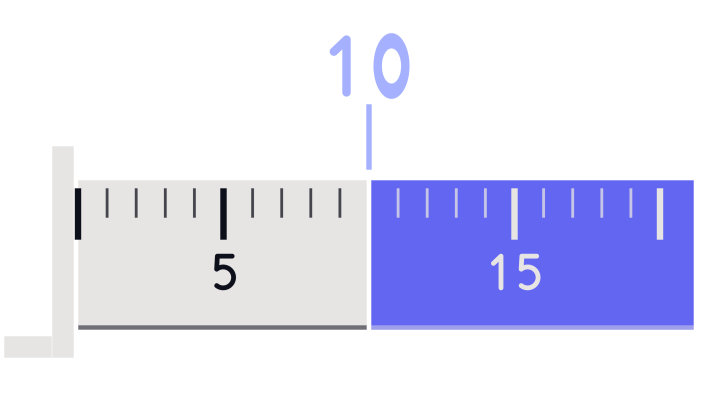
Most reach advantages mentioned before a fight are not advantages. The ones that are do not work the way they are described.
A single-digit reach advantage
Under 5cm the longer fighter wins 49.8%; between 5 and 10cm, 50.9%. Both intervals contain 50, which means neither can establish an advantage at all. Any minute of a camp spent adjusting to a reach gap in single digits is a minute spent on nothing measurable.
Being hit less, not hitting more
Fighters with 10cm or more of reach land 38.6 significant strikes — fewer than the modest-edge group’s 40.1 — while absorbing 35.2 against 38.7. Reach is a defensive attribute. Holding it, the value is in exchanges you decline. Giving it up, the problem is not that you cannot reach them; it is that they need not respect you when you try.
Short fighters: the cards are your friend
The long fighter’s edge is narrowest in decisions at 51.8% and widest in fights that finish — 57.9% by knockout, 60.7% by submission. That gap between finishes and scorecards is real, at 8.9 points. Giving up fifteen centimetres, the version of the fight you want is the one that goes the distance.
All three of the above are findings about the heavier half of the sport. Split by weight band, a 10cm advantage is worth 59.0% from welterweight up and 56.4% at feather and lightweight — but only 47.1% in men’s flyweight and bantamweight, and 48.1% across the women’s divisions, neither of which can establish any advantage at all. Below lightweight, the honest advice is not “ignore the tape under ten centimetres” but ignore it entirely. That is a weight effect and not a sex one: women and the lightest men come out within a point of each other. Reach is also recorded for only 75.0% of fighters, the thinnest coverage on this site.